In short
- Visible blood in the urine should always be checked, even if it goes away and even without pain.
- The most common causes are benign: infection, a stone, an enlarged prostate.
- A bladder or kidney tumour must also be ruled out, especially in smokers and after 40.
- The work-up includes a urine test, imaging and often a cystoscopy.
In this article
Is it really blood?
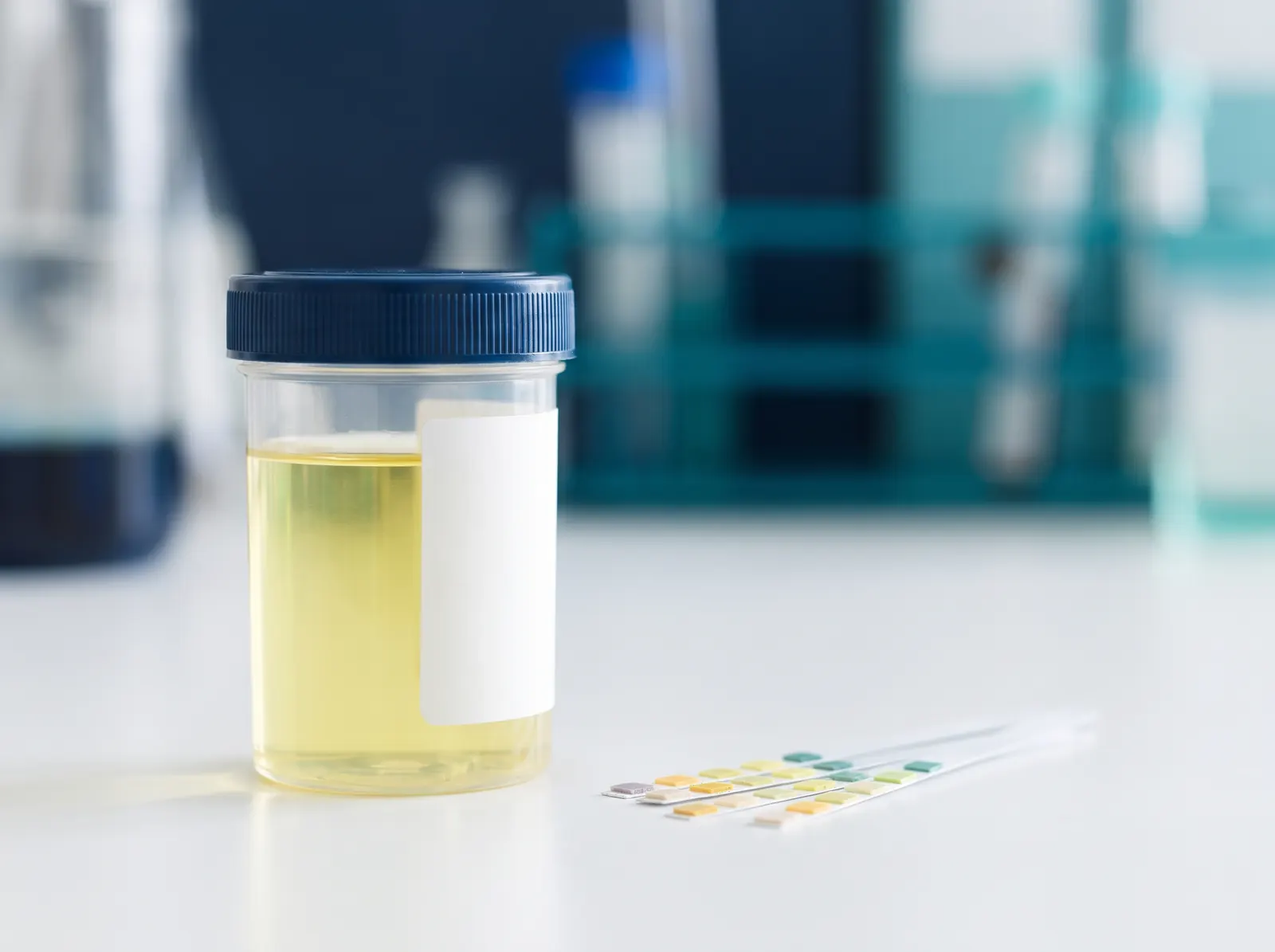
Some foods, such as beetroot, and some medicines can turn urine red. A urine test confirms whether it is really blood.
Blood may also only be visible under the microscope, found on a test done for another reason: this also deserves an opinion.
Possible causes
The main causes of blood in the urine are:
- A urinary infection or prostatitis
- A stone in the kidney, ureter or bladder
- An enlarged prostate
- A bladder or kidney tumour
- Intense exercise or an injury
Why not wait?
Bleeding that stops does not mean its cause has gone. Bladder cancer in particular often shows up as blood in the urine without any pain. Found early, it is much easier to treat. Smoking is its main risk factor.
Which tests?
The urologist starts with a urine test and an ultrasound or CT scan of the kidneys and bladder. A cystoscopy, done in the office under local anaesthetic, looks directly inside the bladder: it is the key test to rule out a tumour.
I take a blood thinner. Is this normal?
Blood-thinning medicines make bleeding more likely, but they do not always explain it: the check-up is still needed. Never stop this medicine without medical advice.
Who is most at risk?
Some factors raise the risk of a bladder tumour and call for prompt testing:
- Smoking, current or past
- Age over 40
- Work exposure to certain chemicals (dyes, rubber, solvents)
- Past radiotherapy to the pelvis
What is a cystoscopy like?
After an anaesthetic gel, a flexible camera a few millimetres wide is passed through the urinary channel. The test takes a few minutes, in the office. Slight discomfort when passing urine is possible for a few hours. The result is explained to you straight away.
Frequently asked questions
When should I go to A&E?
If clots stop you passing urine, if the bleeding is heavy, or if it comes with fever or severe pain.
Do I need a letter from my GP?
No, you can book directly with a urologist.
Is blood in the semen serious?
Usually not: it is generally a benign inflammation that clears on its own. After 40 or if it persists, a urology opinion is recommended.
Learn more
- CareBlood in the urineBlood in the urine (haematuria) or in the semen should always be checked, even if it goes away.
- CareBladder cancerThe main sign is blood in the urine, often painless.
- CareCystoscopyCystoscopy looks inside the urethra and bladder with a thin, flexible camera, under local anaesthetic.
- CareKidney stonesKidney stones form when substances in the urine crystallise.
More advice
 Urologist or andrologist: what is the difference and who should you see?The difference between a urologist and an andrologist, which problems each one treats, and why Dr Ayhan Bakar in Brussels practises both.Read the article
 Your first urology appointment: how to prepareWhat to bring, how it works, tests that may be done the same day: everything you need to prepare your first visit to a urologist in Brussels.Read the article
 Enlarged prostate: symptoms and treatment of benign prostatic enlargementWeak stream, getting up at night, bladder not emptying: how to recognise benign prostate enlargement and the treatments available, from tablets to surgery.Read the article
This information is general and does not replace a consultation. In an emergency, call 112.
Article published by Dr Ayhan Bakar, urologist in Brussels (INAMI 17718534450).
Reference: European Association of Urology (EAU) guidelines.