In short
- A urologist treats the kidneys, bladder, prostate and male genital organs, in men, women and children.
- Blood in the urine, sudden flank pain with fever or a lump in a testicle need a prompt opinion.
- Common problems (weak stream, getting up at night, leaks) respond well when treated early.
- In Belgium you can see a urologist directly, without a referral letter from your GP.
In this article
What does a urologist treat?
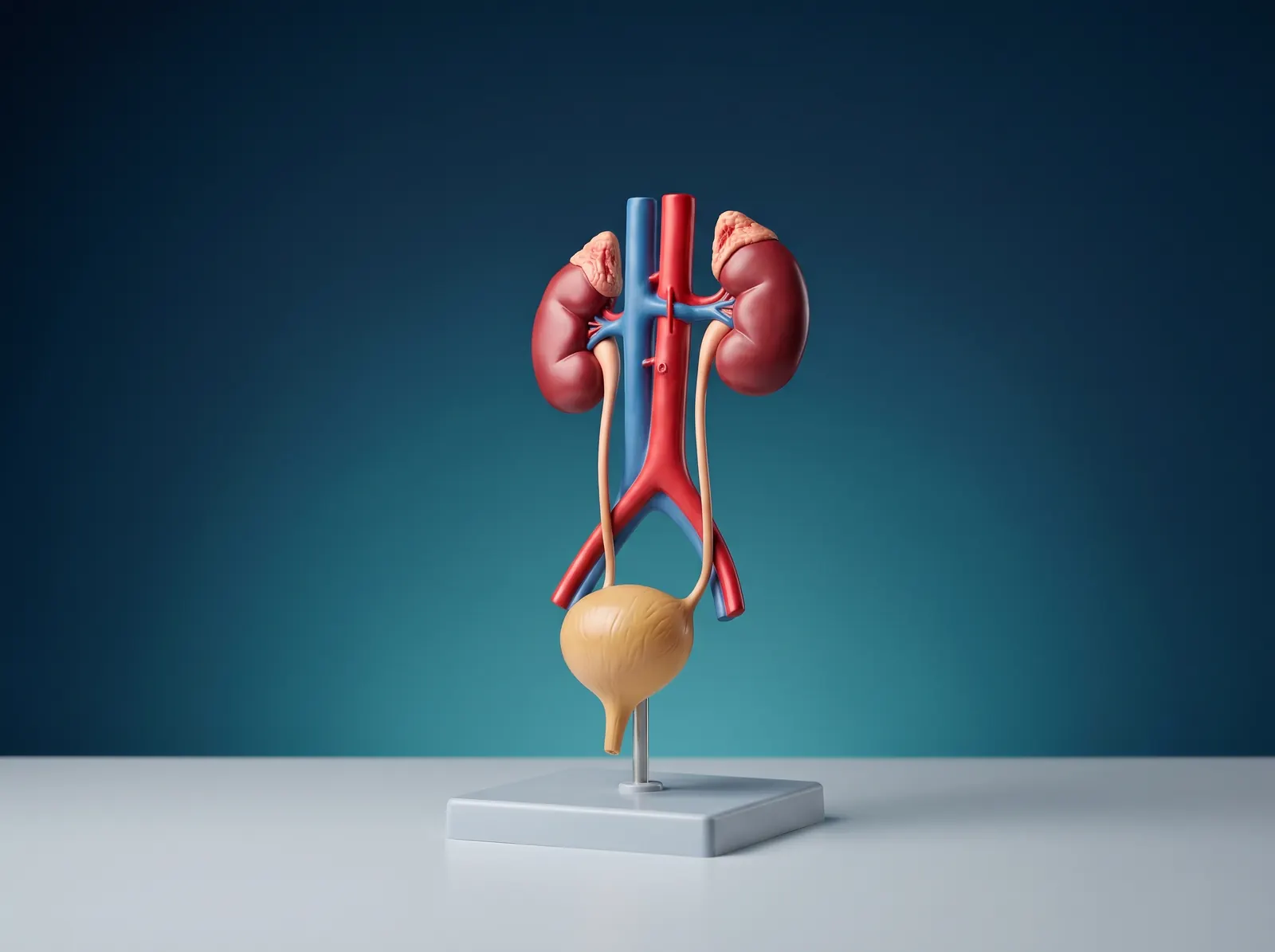
A urologist is the doctor and surgeon of the urinary tract (kidneys, ureters, bladder, urethra) in men, women and children, and of the male genital organs (prostate, testicles, penis). Urologists make the diagnosis, carry out some tests in the office and operate when needed.
Andrology, which covers men’s sexual health and fertility, is also part of their field.
Signs that need a prompt opinion
Some symptoms should never wait:
- Blood in the urine, even once and even without pain
- Sudden pain in the back or side with a fever: this is an emergency
- A lump, hardening or swelling of a testicle
- Being unable to pass urine with a full bladder: go to A&E
- A urinary infection in a man, or with a fever
Common problems worth a consultation
These symptoms are not urgent, but they should not be dismissed: they often have a clear cause and an effective treatment.
- Weak or interrupted stream, difficulty starting
- Needing to pass urine often, especially at night
- Sudden urges or leaks
- Cystitis that comes back several times a year
- Erection or ejaculation problems
- A raised PSA on a blood test
- Trying for a baby for more than a year
Do I need to go through my GP?
No. In Belgium you can book directly with a urologist. Your GP remains your main point of contact: if you have a letter or recent results (blood tests, ultrasound), bring them along, as they save time.
What happens at the first visit?
The doctor asks about your symptoms, medical history and medicines, then examines you. Depending on the reason for your visit, a urine test, an ultrasound or a flow test may be done the same day. You leave with a clear explanation and, if needed, a plan for tests or treatment.
After 50, a check-up is worthwhile
After 50, the prostate enlarges in most men and urinary symptoms become common. A urology check-up separates a benign problem, to watch or treat, from a situation that needs tests. It is also the time to discuss prostate cancer screening.
In children
A tight foreskin, a testicle that has not come down into the scrotum, a swollen scrotum or repeated urinary infections are common reasons to see a urologist in children. An undescended testicle in particular should be seen early, ideally before 18 months of age.
Frequently asked questions
Do urologists also treat women?
Yes. Urinary infections, incontinence, kidney stones and blood in the urine also affect women, who make up a large share of urology patients.
At what age should I see a urologist about my prostate?
There is no set age: see a urologist as soon as urinary symptoms appear. For prostate cancer screening, talk to your doctor from age 50, or from 45 if prostate cancer runs in your family.
What should I do outside clinic hours?
In an emergency (fever with flank pain, being unable to pass urine, sudden pain in a testicle), go to A&E or call 112.
Learn more
- CareUrinary symptomsPassing urine too often, getting up at night, a weak stream or burning: these problems are common in men and women, and they can often be solved.
- CareBlood in the urineBlood in the urine (haematuria) or in the semen should always be checked, even if it goes away.
- CareProstate: enlargement, PSA, prostatitisThe prostate grows with age in most men.
- CareUrinary tract infectionsA single bladder infection is easy to treat.
- CareErectile dysfunctionErectile dysfunction is the ongoing inability to get or keep an erection firm enough for satisfying sex.
More advice
 Raised PSA: what happens next and should you worry?A raised PSA does not mean cancer. Possible causes, the tests to expect (repeat test, MRI, biopsy) and when to see a urologist in Brussels.Read the article
 Renal colic: what to do during an attack and how to prevent new stonesSudden flank pain: when to go to A&E, how kidney stones are treated and how to stop them coming back. Advice from a urologist in Brussels.Read the article
 Erectile dysfunction: what are the treatment options?Tablets, injections, shockwave therapy, PRP, implants: every treatment for erectile dysfunction explained by an andrologist in Brussels.Read the article
This information is general and does not replace a consultation. In an emergency, call 112.
Article published by Dr Ayhan Bakar, urologist in Brussels (INAMI 17718534450).
Reference: European Association of Urology (EAU) guidelines.